A web frontend is redeployed with the backend. A mobile app isn't: people keep old versions installed for months, on networks that drop out mid-request. That changes how I design Django APIs.
Version from day one
Put a version in the URL (/api/v1/) before the first release. When a breaking change comes, and it will, the old app keeps working against v1 while the new one moves to v2.
Paginate everything that's a list
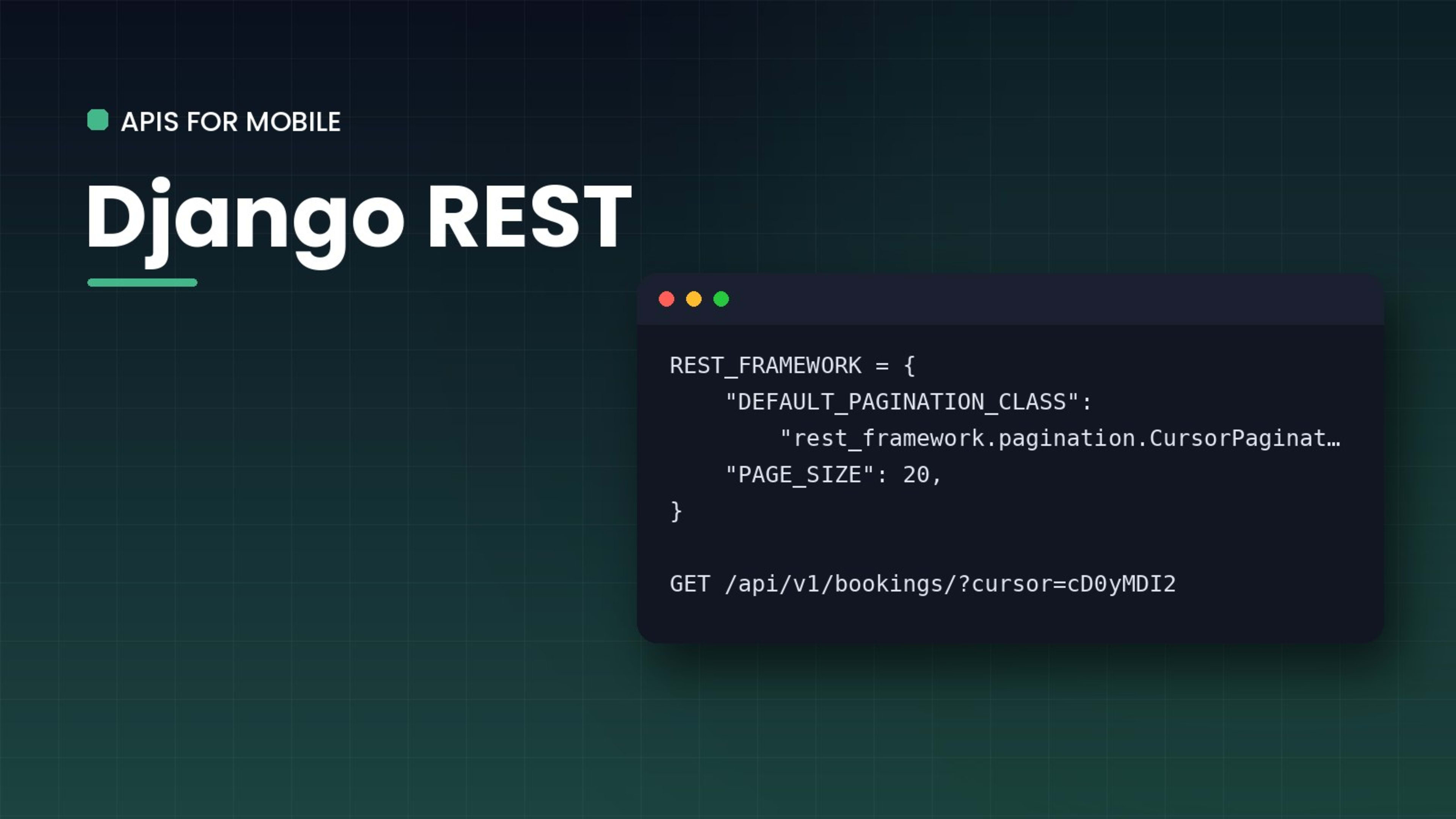
Never return an unbounded list. Cursor pagination works well for feeds because new items don't shift pages around:
REST_FRAMEWORK = {
    "DEFAULT_PAGINATION_CLASS": "rest_framework.pagination.CursorPagination",
    "PAGE_SIZE": 20,
}
Return what the screen needs
If a screen shows a list of bookings with the customer's name, include the name in the booking payload. Making the app fetch each customer separately turns one request into twenty on a slow connection.
Consistent errors
Pick one error shape and use it everywhere, so the app can show a sensible message without special cases:
{ "error": "validation_error", "fields": { "email": ["Enter a valid email."] } }
Tokens that refresh
Short-lived access tokens with a refresh token keep users signed in without long-lived secrets on the device. Make sure the app handles a 401 by refreshing once and retrying, not by logging the user out.
Make writes safe to retry
When a request times out, the app doesn't know whether it succeeded. Accept a client-generated idempotency key on important writes such as payments and bookings, so a retry doesn't create a duplicate.
None of this is complicated, but adding it later, after thousands of installs, is much harder than starting with it.
Comments (0)
No comments yet. Start the conversation.
Join the conversation
Sign in or create a free account to comment.